
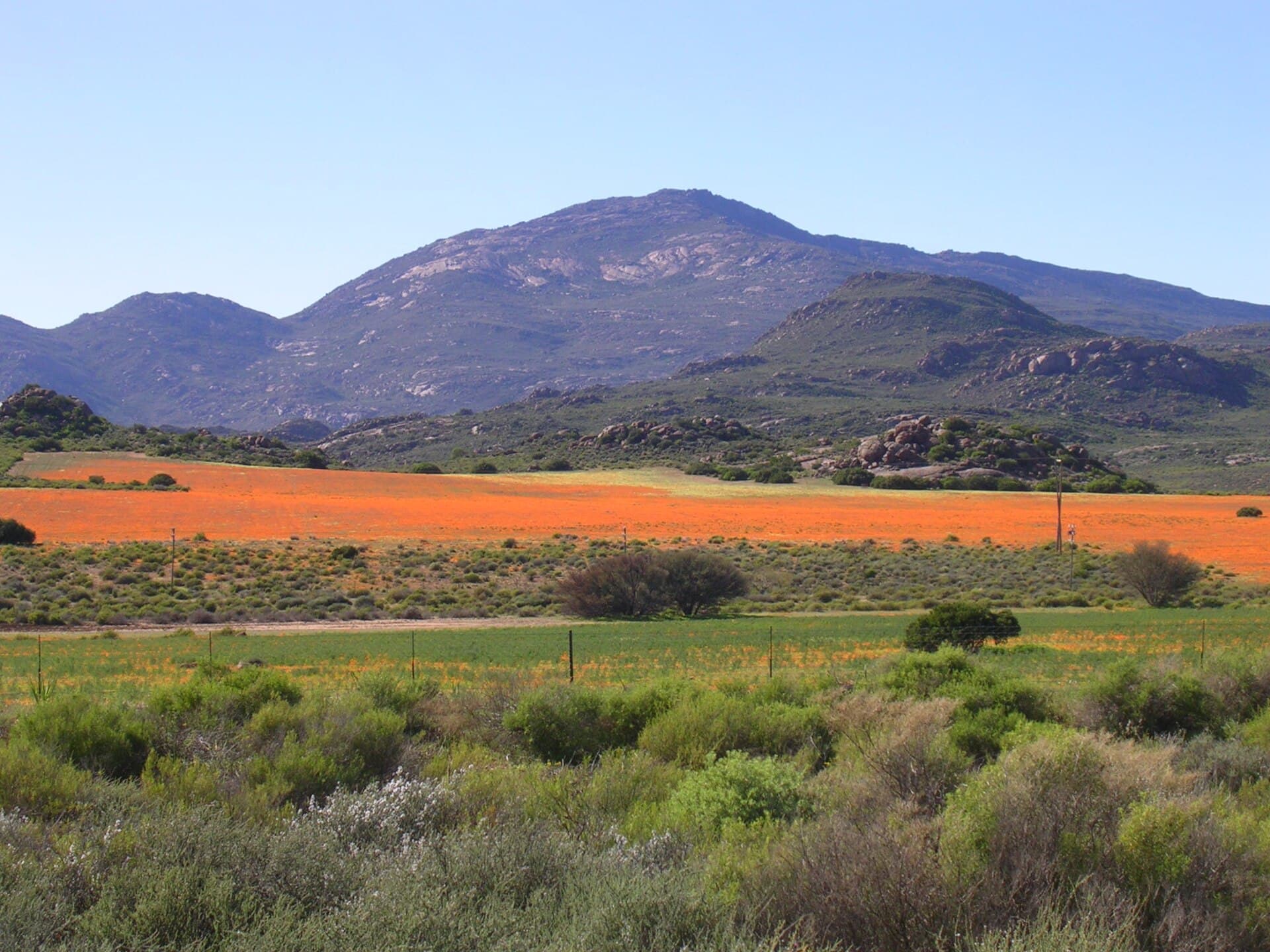
 PlasticOstrich, Public domain / Wikimedia Commons
The Northern Cape is vast, empty and dry — South Africa's largest province and its most sparsely peopled, a land of red Kalahari dunes, Karoo plains and the Orange River. Yet its deserts are astonishingly alive: the Succulent Karoo is one of only two arid regions on Earth counted among the world's biodiversity hotspots, and after good winter rains the Namaqualand veld erupts into one of the planet's great wildflower displays.
- Biome
- Succulent Karoo, Nama-Karoo & Kalahari
- Climate
- Hot and arid; extreme summer heat inland
- Best time
- Aug–Sep for the flowers; winter for the Kalahari
Biodiversity & landscape
South Africa's largest and most arid province is shaped by two Karoo biomes: the winter-rainfall Succulent Karoo of the west — a global biodiversity hotspot — and the summer-rainfall Nama-Karoo of the central plateau, with red Kalahari dune-savanna in the north. The Succulent Karoo is one of only two arid regions on Earth ranked among the world's biodiversity hotspots, and it carries an exceptionally rich succulent flora, with thousands of species and a high proportion found nowhere else. In the far north-west, the mountainous desert of the Richtersveld — a living Nama cultural landscape — was inscribed as a UNESCO World Heritage Site in 2007.
Fauna
The Kalahari is the province's wildlife stage. The Kgalagadi Transfrontier Park, straddling the border with Botswana, spreads over roughly 35,000 km² of red dunes and dry riverbeds famous for black-maned Kalahari lions, gemsbok, meerkats and bat-eared foxes. Across the drier west, the branches of the quiver tree carry the huge communal nests of sociable weavers — one of the desert's most striking sights.
Flora
This is a succulent-lover's province. After good winter rains, Namaqualand stages its celebrated spring flower season, when the veld fills with Namaqua daisies and thousands of other species. The Richtersveld is famous for stem succulents such as the halfmens and the quiver tree, and the Succulent Karoo as a whole carries a remarkable share of the world's succulent plants.
Where to go
- Kgalagadi Transfrontier Park — red-dune Kalahari safari, big cats and raptors.
- Namaqualand in spring — the wildflower spectacle, typically from about mid-August to mid-September.
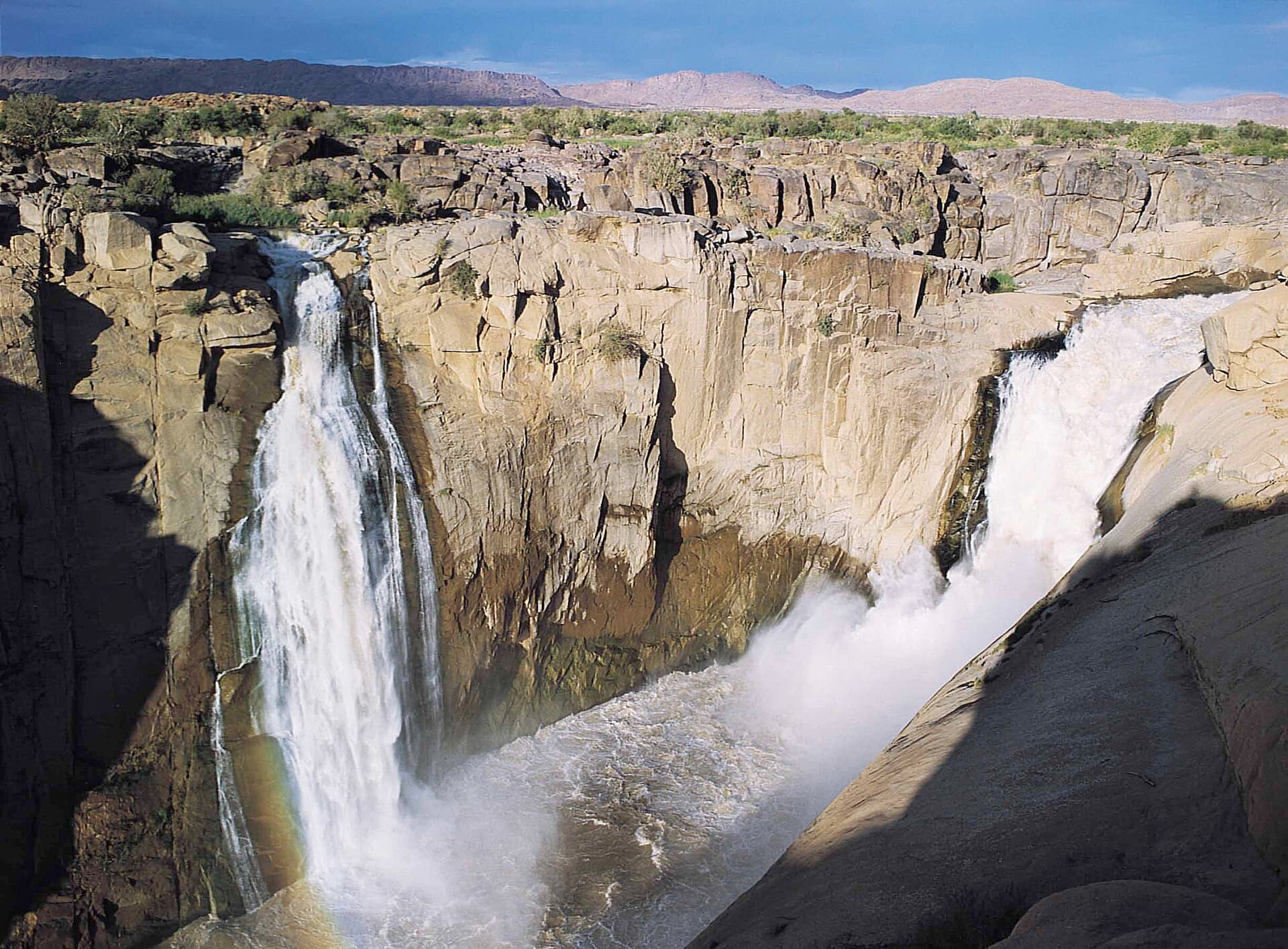
- Augrabies Falls — where the Orange River plunges into a deep granite gorge the Khoi called "the place of great noise."
- The Richtersveld — South Africa's only mountain-desert wilderness, a UNESCO landscape.
- Kimberley — the diamond city and its famous Big Hole.
Weather & when to visit
The Northern Cape is hot and dry — the most arid corner of the country — and, importantly for planning, its rainfall is split. The western fringe around Namaqualand and the Richtersveld lies in the winter-rainfall zone, while the interior and Kalahari get sparse summer rain. Inland summers are extreme, often pushing above 40°C. The best time to visit depends on your goal: late winter and early spring (August–September) for the Namaqualand flowers, the cooler winter months for comfortable Kalahari game viewing, and a wide berth around the searing peak of summer inland.
Places in Northern Cape
 Nature & LandscapesNorthern Cape
Augrabies Falls National Park
The Orange River gathers across the Northern Cape desert, then hurls itself 56 metres off a granite lip into a gorge the Khoi named for its thunder: the "place of great noise."
Verified · 4 sources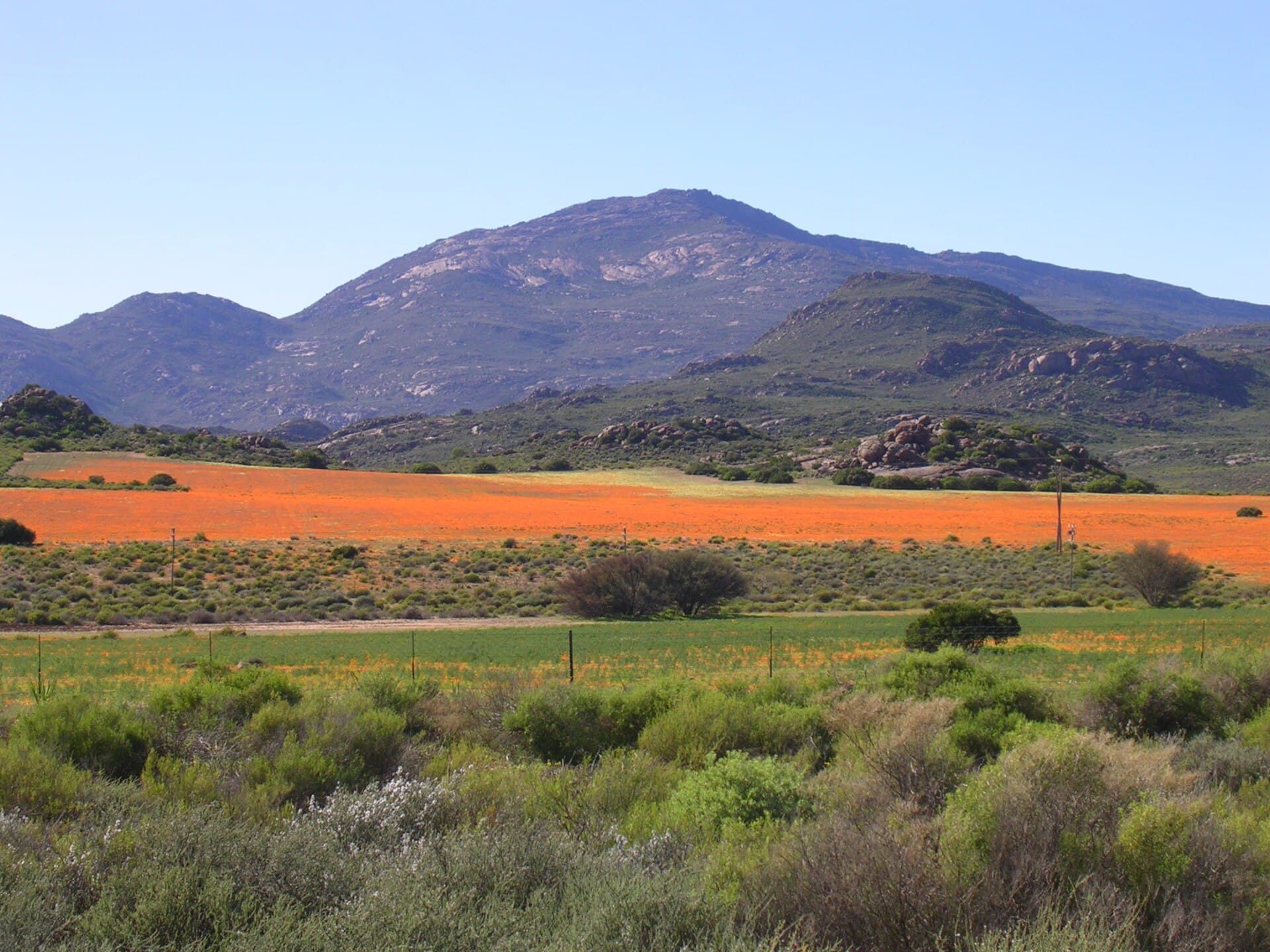 Nature & LandscapesNorthern Cape
Namaqualand
A parched Northern Cape wilderness that, for a few spring weeks, erupts into one of the world's great wildflower displays.
Verified · 4 sources
Sources 22, 27, 55, 104, 166, 267
Provincial capital confirmed via South Africa Info.