
 Raymond Ellis, CC0 / Wikimedia Commons
Best time to visit
Open daily; summer and early autumn are picnic season beneath the camphor trees, and the gardens are staged for year-round interest — camellias in winter, roses in spring and summer.
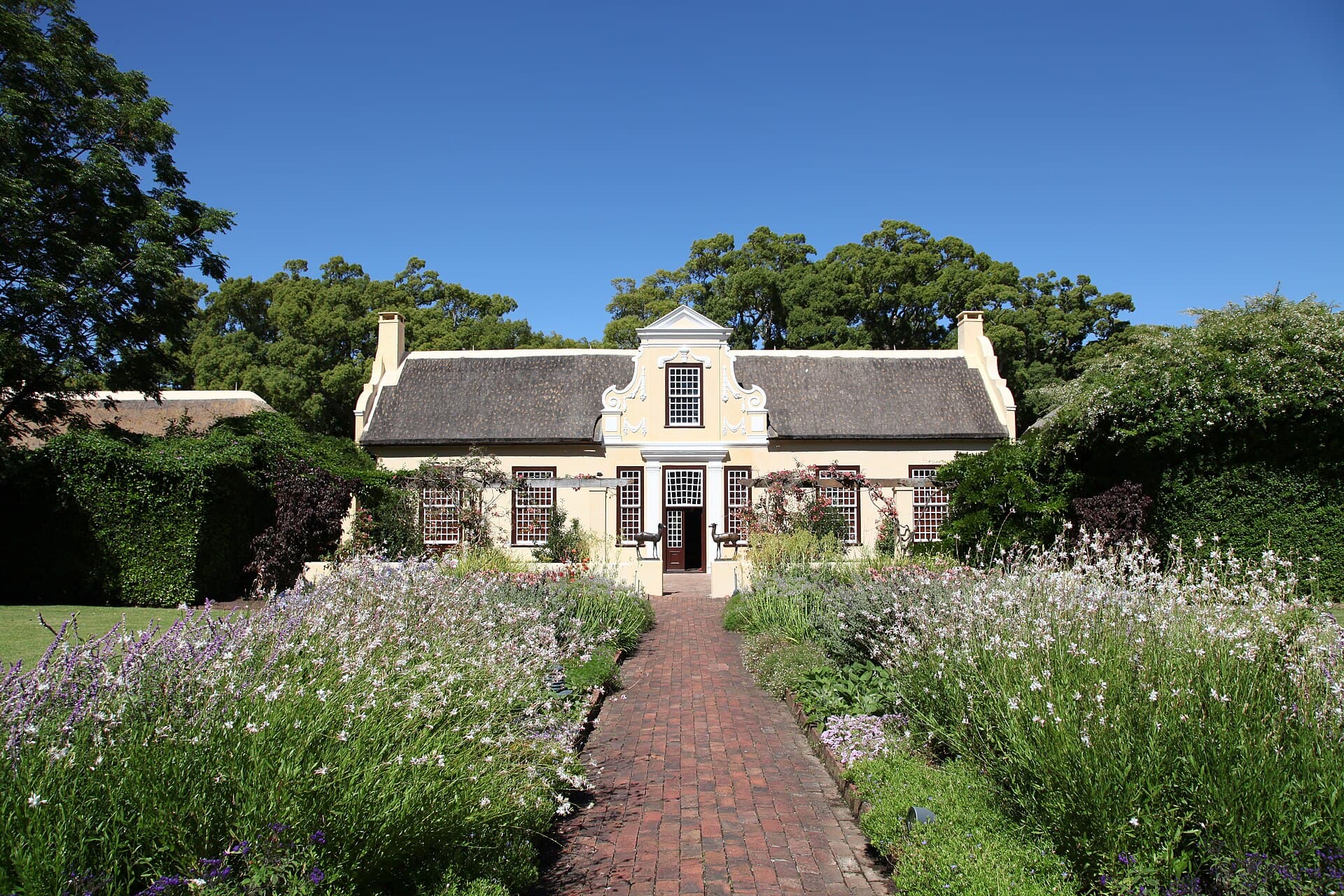
Vergelegen means "situated far away", and it was: when Willem Adriaan van der Stel succeeded his father Simon as governor of the Cape, he took for himself a vast tract behind the Hottentots Holland mountains, formally granted by deed on 1 February 1700. What he did with it in six years still astonishes. He planted half a million vine stocks, laid out orchards and orange groves, put in camphors and oaks, and ran eighteen cattle stations with a thousand cattle and 1,800 sheep; he built a Cape Dutch homestead, a corn mill, a tannery, workshops, wine and grain stores and a slave lodge. The visiting Reverend François Valentijn recorded in 1705 a house with a central gallery eighty feet long and four handsome rooms on either side. It was too much: free burghers led by Adam Tas complained that the governor was using Company resources for private gain, and on 30 October 1706 the Dutch East India Company dismissed him and ordered him home. In 1709 it directed that Vergelegen be sold, split into four farms, and its dwelling house pulled down.
The trees outlived the scandal. Five camphors that Van der Stel planted in his first years here — the estate calls them the Big Five — were declared national monuments in 1942, and seedlings taken from them have grown into the shady camphor forest where the estate now lays out its picnics. They keep company with a yellowwood the estate believes to be around four hundred years old, a three-hundred-year-old English oak, a white mulberry dating to 1700, and a "Royal" oak planted in 1928 from Blenheim stock. Around them Vergelegen has built what it describes as eighteen distinct gardens, staged so that something is in flower in every month: the octagonal garden, the first to be restored, was brought back in time for the estate's hosting of the New World Wine Auction in 1990, and the rose, camellia, wetland, fynbos and hydrangea gardens followed.
Ownership passed through the mining magnate Sir Lionel Phillips, who bought it in 1917 as a present for his wife Florence, and then the Barlow family, before Anglo American bought the property in 1987 and harvested its first vintage in 1992. The estate now covers what it puts at around 3,000 hectares, most of it restored under a fourteen-year alien-clearing programme that earned it Biodiversity & Wine Initiative "Champion" status in March 2005 and led to parts being declared a nature reserve. Visitors come daily for tastings, cellar, garden and eco tours, the Rose Terrace tea room, the Creamery, and picnics in the camphor forest. A fire in March 2026 closed the thatched Stables restaurant — the rest of the estate stayed open throughout, and Stables is expected back in late 2026.
Sources 207, 227, 229, 232, 394, 395
More Wine & Food
 Wine & FoodWestern Cape
Babylonstoren
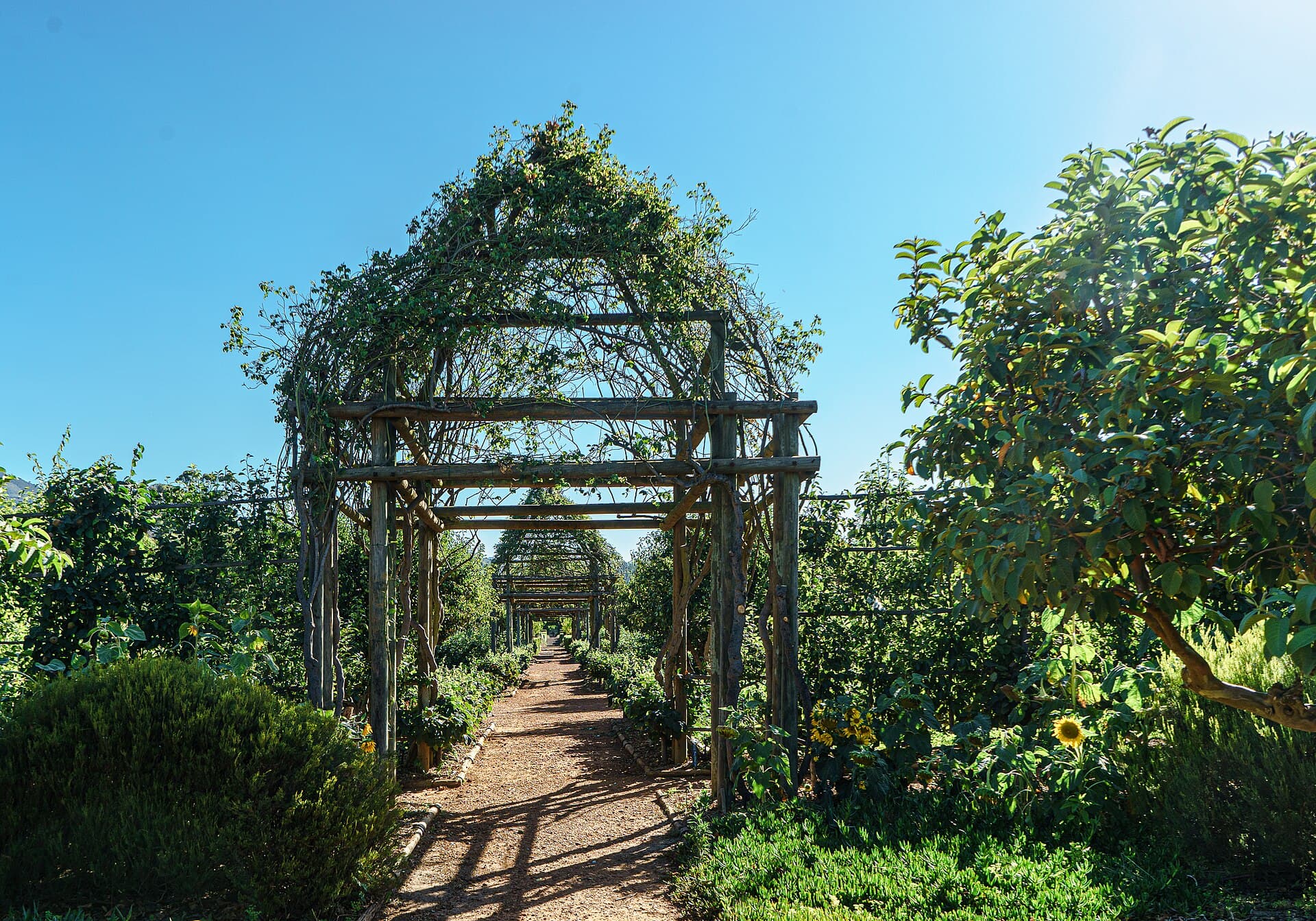
A 1692 Cape Dutch farm between Paarl and Franschhoek whose owners planted a three-and-a-half-hectare garden in which every single plant is edible or medicinal.
Verified · 6 sources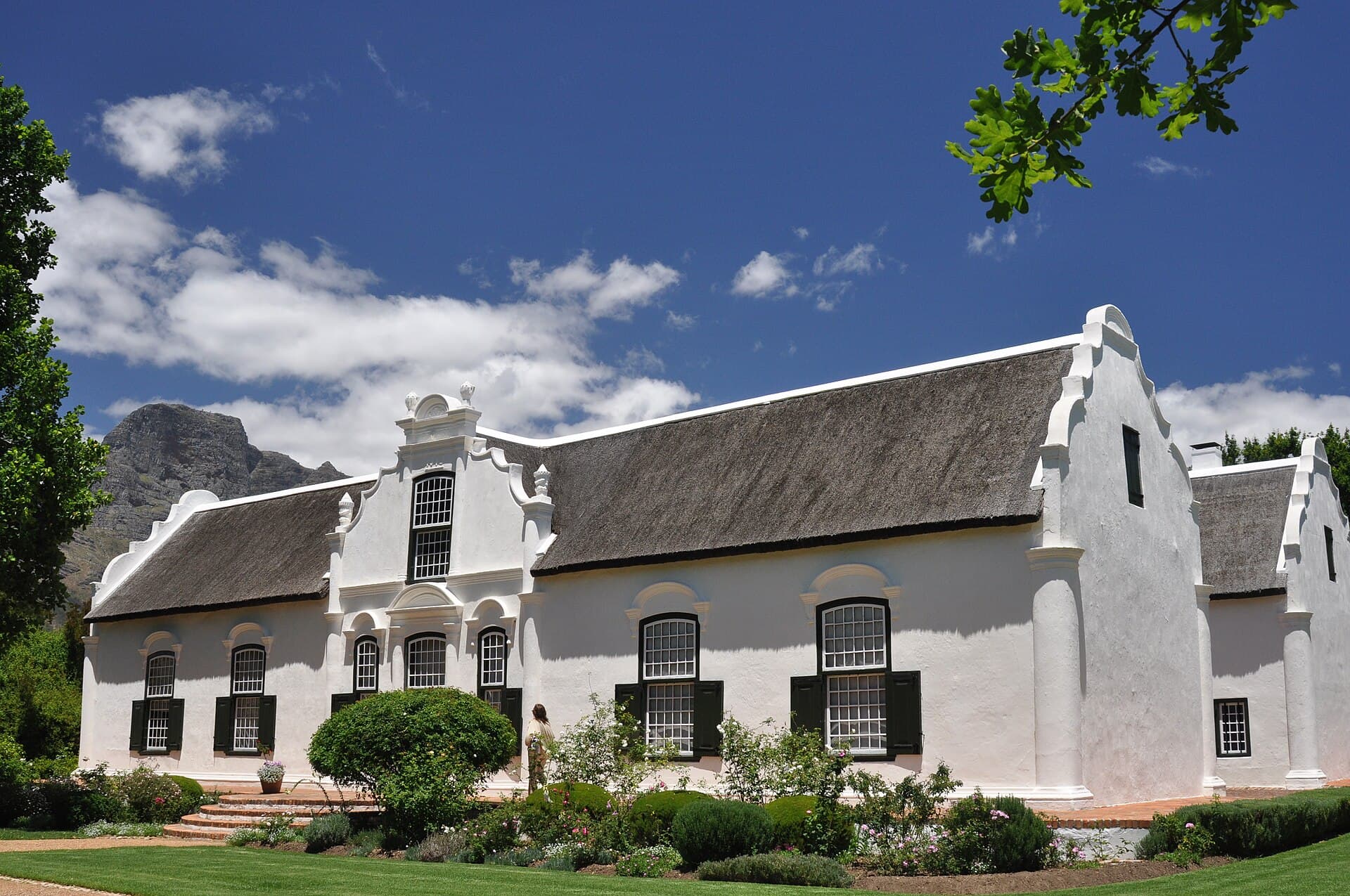 Wine & FoodWestern Cape
Boschendal
Title deeds dated 1685, a gable that still carries the initials of the couple who raised it in 1812, and a national heritage site at the heart of a roughly 1,800-hectare working farm.
Verified · 6 sources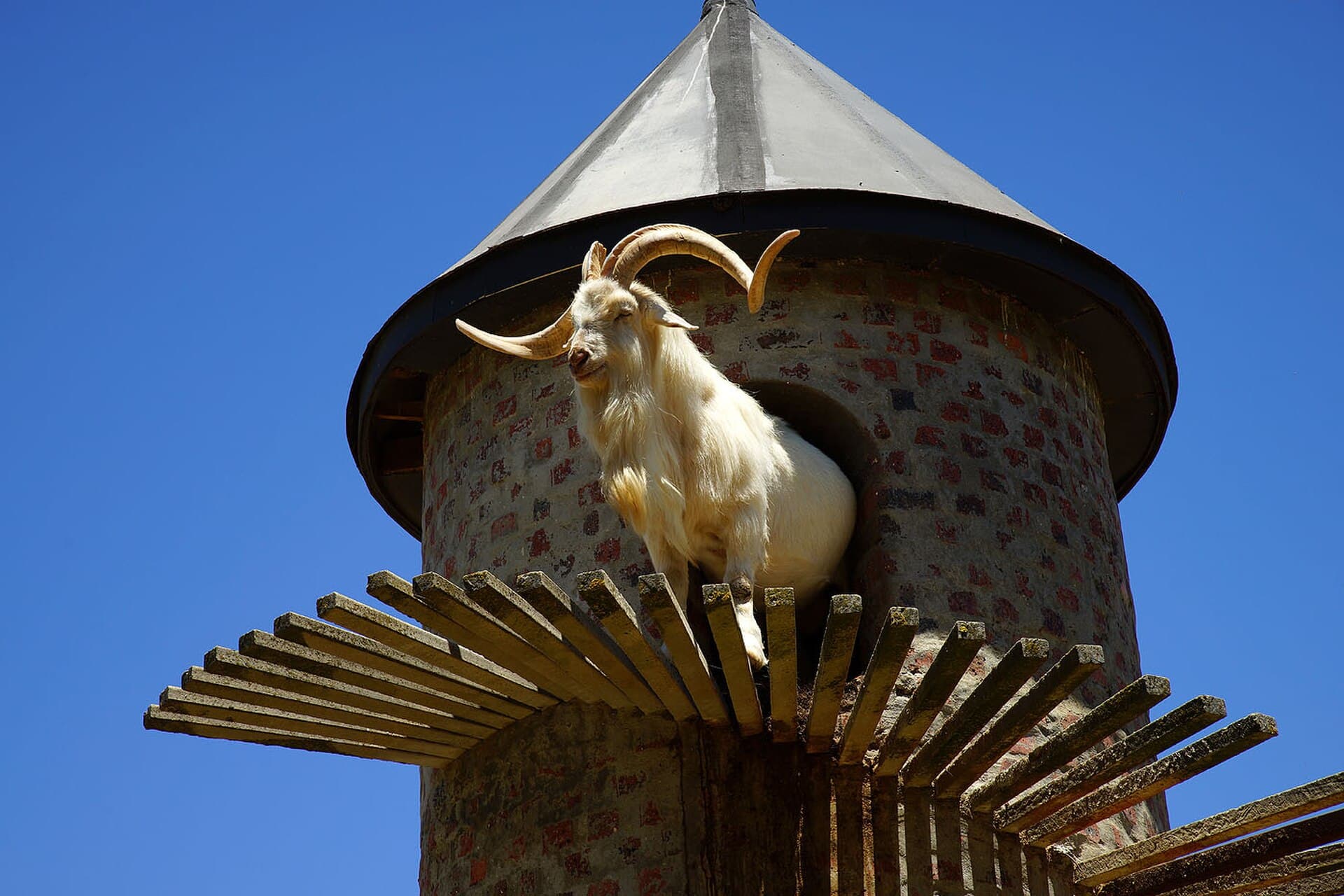 Wine & FoodWestern Cape
Fairview
A Paarl farm called Cauliflower Fountain in 1693, now better known for a two-storey tower its goats climb and a Rhône-baiting wine that made the French reach for their lawyers.
Verified · 6 sources